The spring meeting of the GI working group "Operating Systems" (FGBS) will take place on Thursday, February 26 and Friday, February 27, 2026 in Düsseldorf. The event will be hosted by Michael Schöttner (Heinrich-Heine-Universität Düsseldorf).
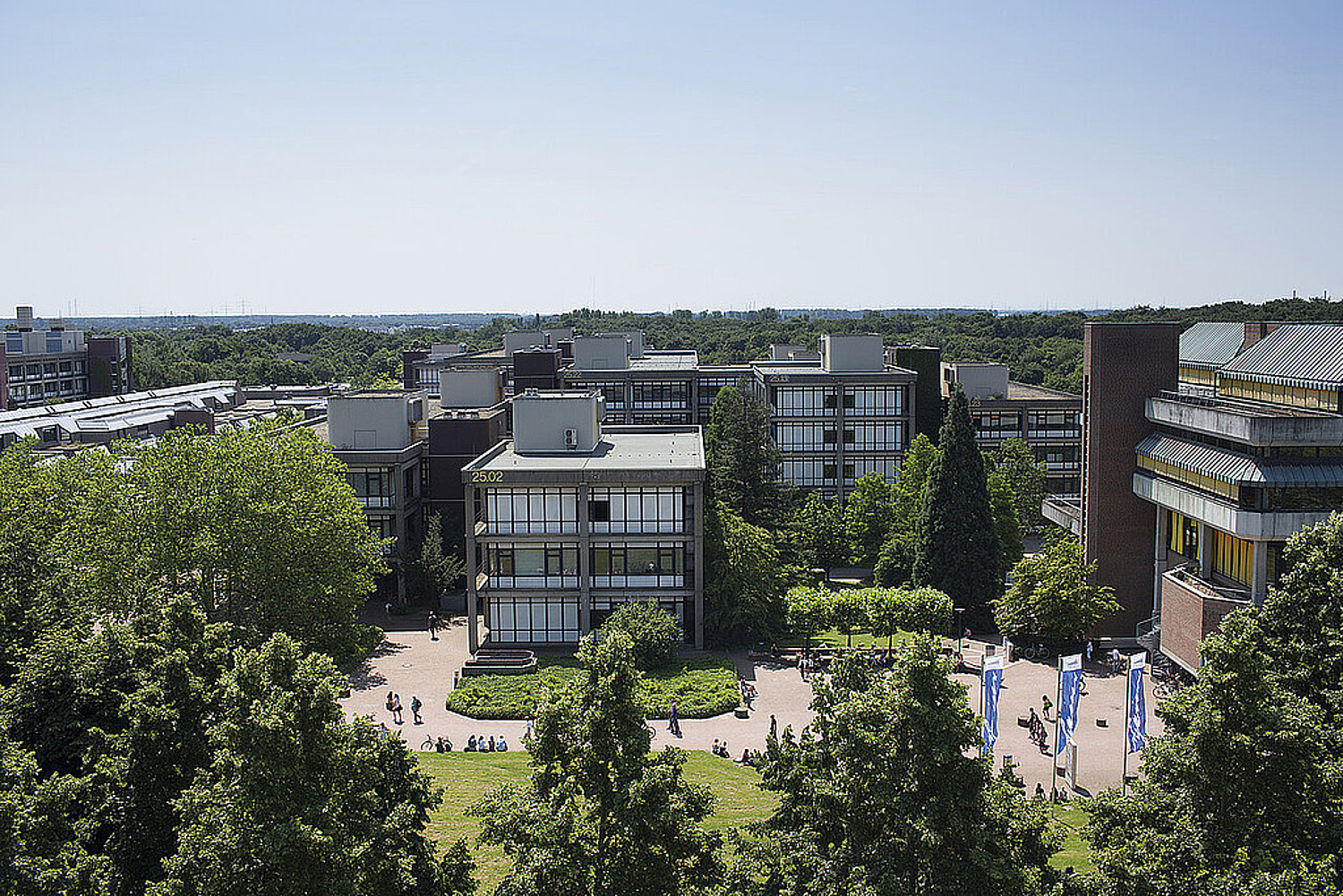
Venue
26.2.2026
Building: 16.61, O.A.S.E.
Coordinates: 51.1938° N, 6.7905° E
27.2.2026
Building: 16.38, P.A.L.M.E.
Coordinates: 51.1945° N, 6.7937° E
The spring meeting of the GI working group "Operating Systems" (FGBS) will take place on
Thursday, February 26 and Friday, February 27, 2026
in Düsseldorf.
The event will be hosted by Michael Schöttner (Heinrich-Heine-Universität Düsseldorf).
The architecture of operating systems has always been strongly shaped by the underlying hardware—and that hardware continues to evolve. While these developments receive substantial attention in computer architecture and security research, they are only partly reflected in operating systems research and development. Many contributions still build on Linux and follow the traditional multi-processor/multi-core model.
At the same time, heterogeneous hardware is becoming increasingly important: accelerators such as GPUs, TPUs, and other specialized components must be managed and coordinated by the operating system. As a result, individual servers increasingly resemble distributed systems internally.
Another key aspect is the historically close relationship between operating system design and programming language development. While the systems community still relies heavily on C, modern type-safe languages such as Rust are gaining influence. The discussion about alternatives to C is not new: it has been ongoing for a long time and tends to resurface periodically with varying intensity—often triggered by new security requirements, tools, or ecosystems.
Finally, artificial intelligence has once again raised fundamental questions for operating systems in recent years. On the one hand, AI workloads are emerging as a new class of applications; on the other hand, AI-driven hardware and system trends are reshaping computing platforms—not only at the single-server level (as described above), but also across large-scale clusters in disaggregated data centers.
The spring meeting of the Operating Systems Special Interest Group therefore focuses on the following guiding questions:
Have hardware and operating system development become decoupled?
Can Rust (or other new programming languages) replace C in operating system development?
How does artificial intelligence influence the architecture and design of future operating systems?
We also warmly welcome talk proposals outside the main focus of the event.
Submissions may either take the form of a one-page abstract (talk only) or optionally a 2–6 page unpublished paper (in ACM conference style) in German or English. All submissions will be reviewed by a program committee composed of members of the working group's leadership. Accepted papers (2–6 pages) will be published in the digital library of the Gesellschaft für Informatik.
Talks in English are explicitly encouraged. To facilitate participation for non-German-speaking members, the presentation language will be indicated in the final program.
Michael Schöttner (HHU Düsseldorf) and Peter Ulbrich (Speaker)
| Schedule (TBD) |
| Submission |
| Travel and Accomodation (TBD) |
| Author's Information |
| Presenter's Information |
| Contakt |