The autumn meeting of the GI working group "Operating Systems" (FGBS) will take place on Thursday, October 08 and Friday, October 09, 2026 in Erlangen. The event will be hosted by Rüdiger Kapitza und Peter Wägemann (Friedrich-Alexander-Universität Erlangen-Nürnberg).
News
| 16.10.2026 | The overview of upcoming events is now online. |
| 07.09.2026 | The program is now online. |
| 31.08.2026 | We are happy to announce Shweta Shinde as the speaker for our invited talk! |
Venue
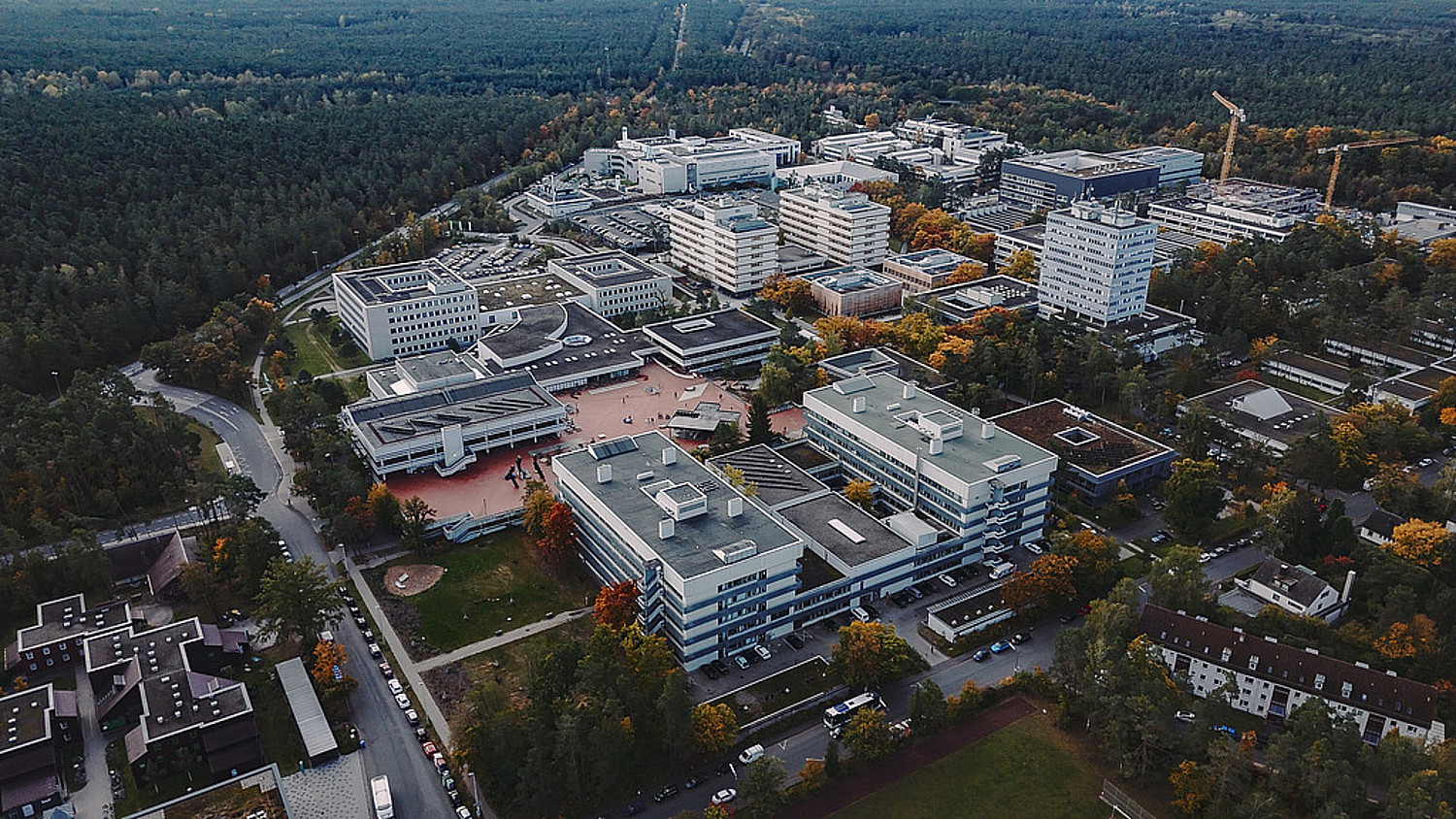
FAU Event Space (Blaue Box), Freyeslebenstraße 1, 91058 Erlangen
Coordinates: 49.5744° N, 11.0132° E OpenStreetMap

FGBS Autumn Meeting 2026: Security, Isolation, and Trust in Modern Operating Systems
Day 1: Thursday, October 8th, 2026 | |
| 12:00 | Welcome (Slides) |
Session 1: Kernel Extensibility & SecurityChair: Peter Wägemann, Karlsruher Institut für Technologie (KIT) | |
| 12:15 | Firefly: High-Performance Transient Execution Attack Defenses for In-Kernel Sandboxes Luis Gerhorst (Friedrich-Alexander-Universität Erlangen-Nürnberg, Ruhr-Universität Bochum), Henriette Herzog (Ruhr-Universität Bochum), Benedict Herzog (Ruhr-Universität Bochum), Peter Wägemann (Friedrich-Alexander-Universität Erlangen-Nürnberg), Rüdiger Kapitza (Friedrich-Alexander-Universität Erlangen-Nürnberg), Timo Hönig (Ruhr-Universität Bochum) |
| 12:35 | The Gamekernel: Unleashing eBPF For Extensibility and Prototyping Nicholas Gordon (Barkhausen Institut) |
| 12:55 | Catch Me If You Can – JIT-based Continuous Re-randomization of the Kernel Address-Space Layout Paul Zinselmeyer (Ruhr-Universität Bochum), Henriette Herzog (Ruhr-Universität Bochum), Maximilian Ott (Friedrich-Alexander-Universität Erlangen-Nürnberg), Timo Hönig (Ruhr-Universität Bochum), Rüdiger Kapitza (Friedrich-Alexander-Universität Erlangen-Nürnberg) |
| 13:15 | Coffee break and finger food (20 minutes) |
Session 2: Trusted ExecutionChair: Phillip Raffeck, Friedrich-Alexander-Universität Erlangen-Nürnberg | |
| 13:35 | CCX: Enabling Unmodified Intel SGX Applications on Arm CCA Matti Schulze (Friedrich-Alexander-Universität Erlangen-Nürnberg), Thorsten Holz (Max Planck Institute for Security and Privacy), Felix Freiling (Friedrich-Alexander-Universität Erlangen-Nürnberg) |
| 13:55 | Rearchitecting the VMM for Confidential Virtual Machines Masanori Misono (Technical University of Munich) |
| 14:15 | TEEM³: Core-Independent and Cooperating Trusted Execution Environments Nils Asmussen (Barkhausen Institut) |
| 14:35 | Towards a Self-Attesting Key Broker for Confidential Containers Yannes Tallowitz (TH Nürnberg), Hans Löhr (TH Nürnberg) |
| 14:55 | Coffee break (20 minutes) |
Session 3: Invited Talk, FGBS MeetingChair: Rüdiger Kapitza, Friedrich-Alexander-Universität Erlangen-Nürnberg | |
| 15:15 | From Smartphones to Cloud: Trustworthy Foundations for Digital Sovereignty Shweta Shinde (ETH) (Invited Talk) |
| 16:15 | Graduate Award |
| 17:15 | Meeting of the Operating Systems Special Interest Group |
| 19:00 | Social Event (Hempels Burger, Marquardsenstraße 18 & Kitzmann Bräuschänke, Südliche Stadtmauerstraße 25) |
Day 2: Friday, October 9th, 2026 | |
| 08:50 | Welcome (Upcoming Events) |
Session 4: IsolationChair: Adam Lackorzynski, TU Dresden/Kernkonzept GmbH | |
| 09:00 | Trust Nothing: RTOS Security without Run-Time Software TCB Eric Ackermann (CISPA Helmholtz Center for Information Security), Sven Bugiel (CISPA Helmholtz Center for Information Security) |
| 09:20 | zBulk: Towards Automatic Compartmentalization in Rust with Zero Manual Retrofitting Maxim Onciul (FAU) |
| 09:40 | Isolation for Cyber-Physical Systems with Linux Confinement Mechanisms Nils Scheidweiler (Friedrich Schiller University Jena), Eric Wintzler (Friedrich Schiller University Jena) |
| 10:00 | Coffee break (20 minutes) |
Session 5: Confidential GPU Computing & Bug FindingChair: Christian Berger, Friedrich-Alexander-Universität Erlangen-Nürnberg | |
| 10:20 | WarpGuard: Towards Control-Flow Attestation for Heterogeneous CPU-GPU Execution Christian Lindenmeier (NVIDIA), Meni Orenbach (NVIDIA), Amro Awad (University of Oxford), Fabian Schwarz (NVIDIA), Fritz Alder (NVIDIA), Ahmad Atamli (NVIDIA) |
| 10:40 | EnclaveX: A Process-Level Approach to GPU Confidential Computing with K8s Support Robert Schambach (TU Dresden), Quoc Do Le (STACKIT Cloud) |
| 11:00 | From Stochastic Parrots to Industrialized Bug Finding – The Impact of LLMs on Linux Distribution Björn Döbel (AWS) |
| 11:20 | Coffee break (20 minutes) |
Session 6: Automotive Software & Cyber-Physical SystemsChair: Peter Ulbrich, TU Dortmund | |
| 11:40 | BMWE Mod2SDV / SADE – Safe and Secure Modular Architectures for the Next-Generation Vehicle Isabella Stilkerich (Schaeffler Technologies) |
| 12:00 | AI-Assisted Porting of Automotive System Software to New Hardware Architectures Andreas Kappel (Pro2Future GmbH), Aimen Medjek (Pro2Future GmbH), Florian Riedl (Graz University of Technology), Amer Kajmaković (Pro2Future GmbH), Tobias Scheipel (Graz University of Technology), Marcel Baunach (Graz University of Technology) |
| 12:20 | Towards a Physical Machine Model for Cyber-Physical Systems Martin Richter (TU Chemnitz), Matthias Werner (TU Chemnitz) |
| 12:40 | Farewell and snacks |
Security, Isolation, and Trust in Modern Operating Systems
In light of increasingly complex hardware and software platforms, new attack surfaces in cloud, edge, and IoT environments, and growing demands for trustworthy data processing, operating system security continues to gain importance. Current developments such as confidential computing, hardware-supported isolation mechanisms, and the prevention of side-channel attacks highlight the central role of operating systems in protecting modern IT infrastructures. At the same time, new architectures, programming languages, and verification approaches raise the question of how operating systems can be designed, implemented, and operated more securely in the future.
The autumn meeting of the Operating Systems Special Interest Group therefore provides a forum for discussing current challenges, solution approaches, and research perspectives in operating system security. Topics of interest include, but are not limited to:
- Secure operating system architectures: microkernels, modular architectures, and approaches for minimizing the trusted computing base.
- Hardening of operating system kernels: protection against kernel exploits, privilege escalation, and unsafe system calls.
- Memory safety in operating systems: use of and migration to safe programming languages, formal verification of system interfaces, drivers, and operating system components.
- Isolation mechanisms: process isolation, sandboxing, containers, virtual machines, and protection between tenants.
- Access control and privilege separation: least privilege, zero trust, capabilities, mandatory access control, and secure rights management.
- Protection against side-channel attacks: prevention of attacks via caches and other shared hardware resources.
- Secure system initialization and system integrity: secure/measured boot, TPM-based attestation, and dynamic integrity checking.
- Confidential computing and trusted execution environments: system support for TEEs, confidential virtual machines, sealing, and attestation.
We also warmly welcome talk proposals outside the main focus of the event.
Submissions may either take the form of a one-page abstract (talk only) or a 2–6 page unpublished paper in ACM conference style, in German or English. All submissions will be reviewed by a program committee composed of members of the working group's leadership. Accepted papers (2–6 pages) will be published in the digital library of the Gesellschaft für Informatik.
Talks in English are explicitly encouraged. To facilitate participation for non-German-speaking members, the presentation language will be indicated in the final program.
Rüdiger Kapitza und Peter Wägemann (FAU Erlangen-Nürnberg)
Immediately after the autumn meeting of the Operating Systems Special Interest Group the excursion of the Special Interest Group for the History of Computer Science and Computers will take place.
Shweta Shinde
From Smartphones to Cloud: Trustworthy Foundations for Digital Sovereignty
ABSTRACT
As computing moves increasingly to the cloud and AI-powered services, a fundamental question emerges: who truly controls our data and computation? Today's systems force users to trust phone manufacturers, operating system vendors, and cloud providers, i.e., entities whose interests often conflict with user privacy and security. In this talk, I will present a research agenda to build systems that enable trustworthy sovereignty, where users can verify who controls their computation rather than blindly trusting cloud operators and management software.
I will demonstrate this vision by exposing and addressing trust failures across three critical architectural layers of modern computing. First, I'll show how we can enable users to reclaim control of their smartphones—running security-critical applications like encrypted messaging and password managers in isolation from both the operating system and manufacturer backdoors. Second, building such a system revealed a deeper problem: a new class of vulnerabilities that break the security guarantees of all major CPU-based trusted execution environments by exploiting fundamental assumptions about how processors handle hardware interrupts.
Finally, I'll expose an emerging attack surface in chiplet-based processors and accelerators used in the cloud: as components disaggregate, the interconnects linking them can be exploited to completely bypass security. To address this, I'll present techniques to systematically detect and prevent such vulnerabilities in hardware designs before chips reach production. Together, these contributions reveal fundamental vulnerabilities across the computing stack and demonstrate practical paths toward building systems where trust is verified rather than assumed, enabling genuine digital sovereignty for individuals, organizations, and nations.
BIOGRAPHY
Shweta Shinde is an Assistant Professor in the Department of Computer Science at ETH Zurich, where she leads the Secure & Trustworthy Systems (SECTRS) group. Her research focuses on building fundamentally secure large-scale systems. She has a track record of uncovering real-world vulnerabilities in confidential computing environments based on insights that emerge from the understanding gained through her work to secure them. Her defensive research has translated into deployed solutions, with real-world impact extending well beyond the academic setting. Prior to joining ETH Zurich in October 2020, Shweta was a postdoctoral scholar at the University of California, Berkeley, and completed her PhD at the National University of Singapore.